Sector · Retail

Store survey and as-built for multi-store rollout.

We work for the practice and for the project manager, not for the shop window: point cloud, DWG drawings, Revit and IFC of every unit, to the same delivery standard across all thirty stores in the batch. The survey comes off the rollout's critical path.

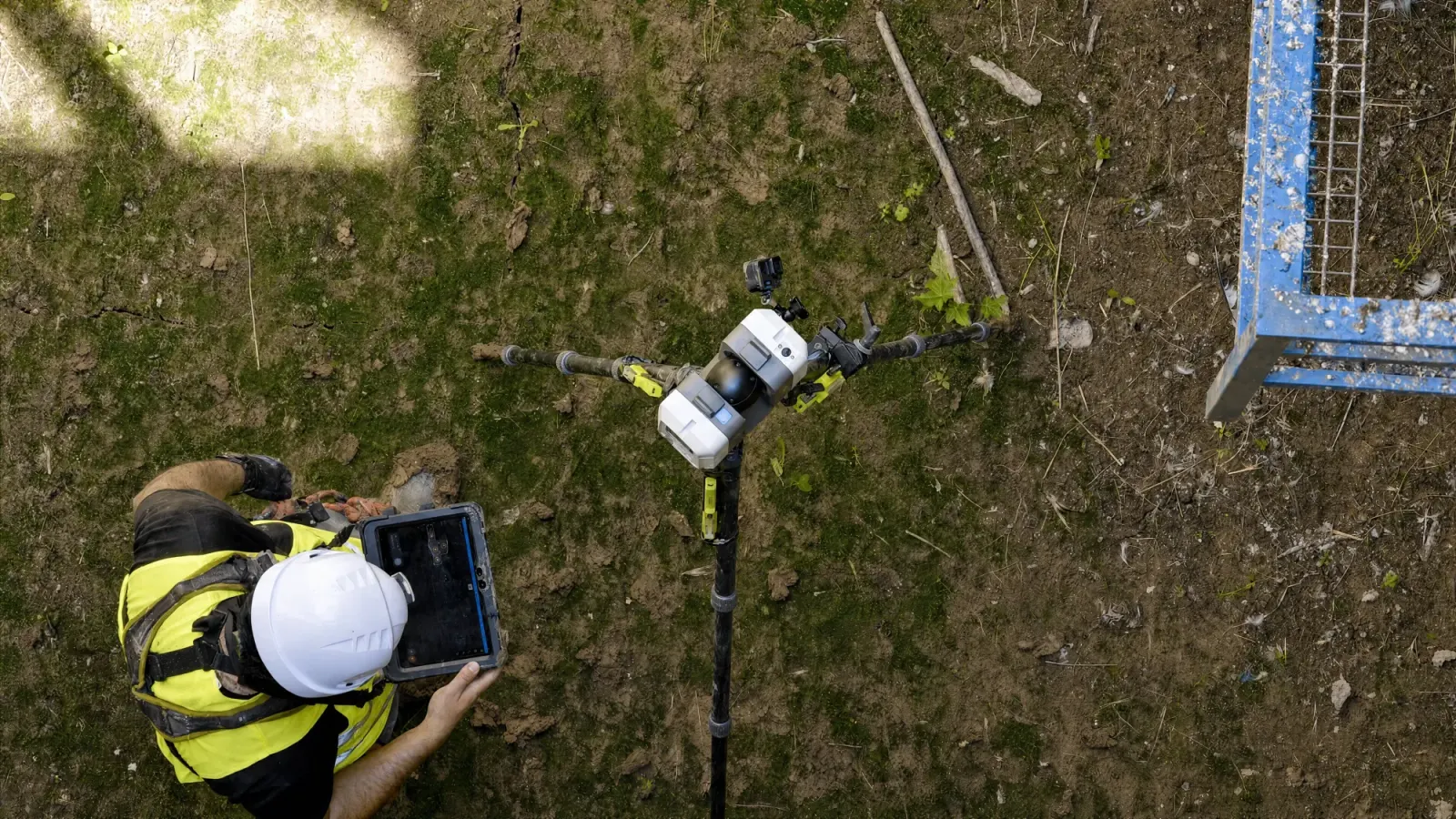
Leica RTC360 laser scanner seen from above with a LAURIA ESCÁNER surveyor reviewing the capture on a tablet
The problem

On a rollout, the drawing arrives late and does not match.

Whoever coordinates a multi-unit fit-out does not have a measurement problem: they have a schedule and consistency problem. These four keep recurring.

The landlord's drawing is not the unit

Design starts from the documentation the landlord supplies, and on site the columns sit elsewhere, the clear heights differ and there are drainage stacks nobody drew. The overspend surfaces once the joinery is already made.

Every unit arrives in a different format

One unit measured by the landlord, another by a local surveyor, another by the site manager with a laser distance meter. Thirty units, thirty layer and dimensioning conventions, and nothing that can be compared.

The survey sits on the critical path

Nothing starts until there is a reliable existing-condition record. Every remeasure visit caused by one missing dimension pushes the opening date back.

The store cannot close to be measured

If the unit is trading, or the shopping centre only grants access out of hours, the measuring window is a few hours long and will not take a second pass.

Deliverables

One capture, the formats each team actually uses.

The same point cloud feeds the architect, the shopfitter's technical office and the brand's design team. Scope is agreed before the first visit and applied identically across the batch.

To design and to build

  • Plans, elevations and sections in DWG, in your own template and layer standard.
  • Revit as-built model of the unit, at the agreed level of detail.
  • IFC where the project is coordinated across several offices.
  • Net and gross areas measured on real geometry.

To decide without travelling

  • Navigable point cloud: any missing dimension is taken without returning to site.
  • Gaussian Splatting of the unit so the design team can visit it remotely.
  • One viewer to compare units in the batch against each other.
  • A record of prior condition, useful when negotiating with the landlord.
Method

SLAM for speed, TLS for the millimetre.

The choice of instrument is not our preference: it follows the access window and the accuracy the project demands. On a batch, both are used.

Unit still trading

Handheld SLAM scanner: the surveyor walks the unit through, cordoning off and clearing nothing. Centimetric accuracy, enough for fit-out layout and to confirm the concept fits.

Manufacturing accuracy

Tripod-mounted terrestrial scanner. Millimetric accuracy where bespoke joinery, shopfront or glazing is manufactured before anyone sets foot on site.

One protocol per batch

Same capture convention, same coordinate origin and same delivery for every unit, so the drawings of unit one and unit thirty are genuinely comparable.

Related services

The technology behind each deliverable.

We combine capture and modelling according to the access window, the accuracy and the formats your team needs.

FAQ

Questions about retail and rollout.

Can you scan while the store is open and trading?

Yes. With a handheld SLAM scanner the surveyor walks the unit through, with no tripod to set up and no area to cordon off, so the store does not need to close or be cleared. Where the project demands millimetric accuracy we use a terrestrial scanner, which does need setting up: that work is done after closing or before opening, which is standard practice on retail fit-out.

Can you deliver in our own template and layer standard?

Yes, and on a rollout that matters more than anything else. The DWG template, layer standard, dimensioning convention and level of detail are agreed before the first survey and applied identically to every unit in the batch. Drawings for thirty stores then open and compare without reformatting a single one.

How is a batch of several units organised?

By routes, not as separate jobs. Units are grouped by geography and by access window, a single capture and delivery protocol is defined, and units are released in waves as they are processed rather than held back until the batch is complete. The real timeline is set by how scattered the units are and when access is available, not by the scanning itself.

Do you work on units outside Spain?

Our technical base is in Madrid and our usual coverage is the whole of Spain. For units outside Spain travel is assessed project by project, and it makes sense when several units sit in the same area: the travel cost is spread across the batch instead of loaded onto a single store.

Contact

Have a site in Spain
that needs capturing?

Tell us what you need surveyed. We review your case with no obligation and send back a technical and commercial proposal matched to your requirements — in English, working to your project timetable.

Email hola...
Coverage Spain · International clients